

The endemic exploitation of migrant workers in Australia must stop
Canberra Times | Sanmati Verma, Bassina Farbenblum, Laurie Berg, Matt Kunkel
“Research conducted by the Migrant Justice Institute in 2018 found that of the 4332 migrant workers surveyed, around three-quarters were paid less than the casual minimum wage, and yet only 9 per cent of underpaid migrants had taken action to recover their wages.
These figures cannot be explained away by visa holders' lack of understanding or workplace literacy. Nor can they be chalked up to bad-apple employers or fraudsters preying on the unsuspecting.
Rather, they are a product of the insecurity and inequality that has been built into the migration regime over years.Advocates for limiting the working holiday program to one year argue the requirement to work in the regions left workers open to exploitation. A survey by the Migrant Justice Institute found that almost half of all working holidaymakers reported being paid well below the minimum wage.”
Canberra Times | Sanmati Verma, Bassina Farbenblum, Laurie Berg, Matt Kunkel
“Research conducted by the Migrant Justice Institute in 2018 found that of the 4332 migrant workers surveyed, around three-quarters were paid less than the casual minimum wage, and yet only 9 per cent of underpaid migrants had taken action to recover their wages.
These figures cannot be explained away by visa holders' lack of understanding or workplace literacy. Nor can they be chalked up to bad-apple employers or fraudsters preying on the unsuspecting.
Rather, they are a product of the insecurity and inequality that has been built into the migration regime over years.Advocates for limiting the working holiday program to one year argue the requirement to work in the regions left workers open to exploitation. A survey by the Migrant Justice Institute found that almost half of all working holidaymakers reported being paid well below the minimum wage.”

Webinar 14 Dec: Beyond Qatar: Global opportunities to address migrant workers’ access to justice for wage theft
Join us on December 14, 2022 at 18:00 GMT for a live global webinar with experts and advocates from around the world to discuss progress and opportunities for ensuring that migrant workers can recover the wages they are owed. The webinar will feature the ILO's launch of a new Guidance Note on Wage Protection. Spanish interpretation will be provided.
Beyond Qatar: Global Opportunities to Address Migrant Workers’ Access to Justice for Wage Theft
December 14 2022, 18:00-19:30 GMT
Join us for a live global webinar on migrant workers, wage theft and access to justice. The event—Beyond Qatar: Global Opportunities to Address Migrant Workers’ Access to Justice for Wage Theft—will feature discussion of the ILO’s forthcoming Guidance Note on Wage Protection, and will bring together experts and advocates from around the world to discuss next steps to ensure that migrant workers can recover the wages they are owed. Spanish interpretation will be provided.

About the Webinar
As the 2022 World Cup comes to a close, thousands of migrant workers whose labour made the games in Qatar possible have still not been paid the wages they are owed. But what happened in Qatar is not the exception. Rather, in every country around the world, migrant workers routinely face wage theft because of their unique vulnerability as migrants. A migrant worker who comes forward risks not only job termination but removal from the country, and once gone, their ability to recover wages in the country of employment usually disappears as well. Many return home with a significant debt of unpaid wages that they will never recover.
Migrant Justice Institute, Solidarity Center, the ILAW Network and MIDEQ invite you to a global conversation on next steps to ensure justice for migrant workers. The event will include a discussion with trade unions and civil society advocates in the Americas, MENA, Asia, and Australia on the challenges that migrant workers face in recovering the wages owed to them, and promising initiatives and strategies for systemic change. It will also include the presentation of a new ILO Guidance Note on Wage Protection, and next steps in the research that we will undertake in 2023 to support advocates (and governments) to drive this change.
About the Project
Following our 2021 report on promising global initiatives to address wage theft, Migrant Justice Institute, in partnership with Solidarity Center, the ILAW Network and MIDEQ, is undertaking new research and advocacy around effective laws and systems aimed at wage recovery. With input and advice from advocates globally, we will continue to develop policy models and reform recommendations based on detailed empirical and legal research into best practices around the world. Future webinars will present these findings and introduce new and successful initiatives to recover workers’ wages. Please see the project webpage for more information and to sign up for updates on webinars and new research.

Senate Committee adopts MJI Recommendation on Undocumented Workers
Today, a federal Senate Committee adopted Migrant Justice Institute’s recommendation to amend Australian labour law to confirm that it applies regardless of immigration status.
Today, a federal Senate Committee adopted Migrant Justice Institute’s recommendation to amend Australian labour law to confirm that it applies regardless of immigration status.
This was one of only 8 recommendations made by the Senate Education and Employment Legislative Committee inquiring into the Australian Government’s Fair Work Legislation Amendment (Secure Jobs, Better Pay) Bill 2022 (Cth).
Our written submission to the Committee and oral testimony had commended the Bill’s aims to boost bargaining and improve job security for workers. But we argued the Bill misses a key opportunity to tackle migrant worker exploitation, including by clarifying that undocumented workers are not excluded from protection of the Fair Work Act 2009 (Cth).
There is conflicting caselaw as to whether undocumented workers are entitled to those statutory labour protections, as well as protections in workers compensation legislation and anti-discrimination laws. This has created a loophole through which employers can freely exploit and underpay undocumented workers and evade paying compensation for their workplace injuries. We recommended amendment of the Fair Work Act to remove this gap in protection, as well as amendment to the Migration Act 1958 (Cth) to ensure undocumented workers are not excluded from a range of other workplace protections.
We also recommended five further amendments to the Bill to strengthen protections for migrants and other vulnerable workers as part of this Bill:
Objects of the Fair Work Act: the objects provisions must be broadened to not only promote job security and gender equity, but also to (1) promote decent work; (2) eliminate the exploitation of vulnerable workers; and (3) address the systemic drivers of exploitation.
Small claims reform: In addition to enabling successful claimants to recover filing fees as costs, successful claimants should be able to recover their legal costs.
Advertisements: To ensure that the proposed prohibition captures the ways that many employers ‘advertise’ jobs, a legislative note should confirm that prohibited advertising includes written communication by employers to potential employees via online apps and social media.
Information and transparency: To ensure that workers are aware of their specific entitlements and able to identify their employing entity if they wish to bring a claim, the FW Act should be amended to require employers to provide each worker with a statement of specific working conditions (Award, wage rates, hours etc.) and employer contact details (including address for service) upon commencement, and to itemise deductions on payslips.
Legal responsibilities for individuals & supply chains: The Migrant Worker Taskforce recommended that the government consider additional avenues to hold individuals and businesses to account for their involvement in breaches of workplace laws. For this Bill, we recommend a strengthening of current accessorial liability provisions to stop rewarding businesses who turn a blind eye to exploitation and to remove the inconsistency with the responsible franchisor provisions.
Beyond this Bill, we argued, the Government must introduce further reforms to the Fair Work Act and Migration Act to incentivise employer compliance and improve access to justice, and to give effect to the Migrant Worker Taskforce recommendations. This includes whistleblower protections for workers who come forward with a complaint; a simpler, fairer and faster dispute resolution process for unpaid wages and entitlements; a more accessible and better resourced enforcement agency with a dedicated unit and wage calculation service for migrant workers; and a proper safety net (including extended access to the Fair Entitlements Guarantee) when businesses liquidate or disappear.
We understand that further reforms are slated for 2023, and we look forward to working with the Government and other stakeholders to develop these reforms based on robust evidence of migrant workers’ experiences.

Webinar 22 June: Migrant workers' access to justice for wage theft in the Americas
Join the Migrant Justice Institute for this important conversation with the lawyers, advocates and organisers involved in driving effective reforms. How have promising changes to laws, policies, and government processes come about? What were the conditions that enabled them? And what lessons can be learned for other advocates?
IMPROVING MIGRANT WORKERS’ ACCESS TO JUSTICE FOR WAGE THEFT: EFFECTIVE APPROACHES IN THE AMERICAS
June 22 2022
Last year, the Migrant Justice Institute collaborated with the ILAW Network and Solidarity Center on a study of promising initiatives that are strengthening wage claim processes around the world, and compelling businesses to comply with wage judgments. This included a number of innovative examples from the Americas.
This important discussion with the lawyers, advocates and organisers involved addresses innovative strategies they have used to drive effective reforms.
Speakers
Neha Misra & Jeff Vogt, Solidarity Center | Moderators
Associate Prof Bassina Farbenblum, Migrant Justice Institute | Key research findings on promising initiatives in the Americas and globally
Ruth Silver-Taube, Santa Clara University School of Law | How a coalition achieved reforms to improve compliance with wage judgments in San José
Angélica Palacios Martinez, Solidarity Center, Colombia | Organising rideshare workers in Colombia to compel government agency responses to migrant wage claims
Rachel Micah-Jones, Centro de los Derechos del Migrante (CDM) | Seizing opportunities to strengthen transnational migrant worker wage claim processes during the pandemic
Amanda Aziz, Migrant Workers Centre Canada | Canada’s new law providing visa portability for exploited migrant workers: Achievements and strategies for further reforms
Associate Prof Laurie Berg, Migrant Justice Institute | Building a global community of practice to drive law and policy reforms to address wage theft

Australia is bringing migrant workers back – but exploitation is still rampant. Here are 3 changes needed now
The Conversation
The incoming Australian government elected on May 21 will inherit Australia’s dark legacy of entrenched wage theft among migrant workers. It must make a choice.
Its first option is to seize the moment while there are still relatively low numbers of migrant workers in Australia to fix the parts of the system that enable wage theft to flourish. The second option is to continue tinkering around the edges of the problem, and consciously bring hundreds of thousands of young migrants into exploitative underpaid jobs they will likely endure in silence.
It is time for an Australian government to set its sights higher and adopt an evidence-based and systemic approach to tackling migrant exploitation. If Australia is genuinely committed to ensuring labour compliance and curbing forced labour and modern slavery, it cannot afford to miss this opportunity.
Read more in The Conversation.
Photo by Andrew Valdivia on Unsplash

A missed opportunity - Migration Amendment Bill fails to protect migrant workers
Last week, the government introduced the Migration Amendment (Protecting Migrant Workers) Bill. By simply targeting a ‘few bad apples’, this Bill misses an opportunity to systemically address migrant worker exploitation.
In late 2021, the Commonwealth Government introduced the Migration Amendment (Protecting Migrant Workers) Bill. We commend the government’s intention to strengthen protections for migrant workers from workplace exploitation in Australia. Unfortunately, this Bill is unlikely to meaningfully contribute to this goal and may in fact make some workers more vulnerable to abuse.
The Bill creates new offences for employers, labour hire intermediaries and others who coerce or exert undue pressure on migrant workers to breach their visa conditions or accept particular work arrangements. It creates a new category of ‘prohibited employers’, who have been found to have contravened various labour and immigration laws). It empowers the Department of Home Affairs to prevent these employers from engaging additional migrant workers and publicise these employers’ details on their website. The Bill also equips the Australian Border Force with additional regulatory powers.
We are pleased that the Bill has been referred to the Senate Legal and Constitutional Affairs Legislation Committee. As set out in our submission to that Senate Committee’s inquiry into the Bill, the Bill’s narrow focus on immigration enforcement misses an opportunity to make a systemic difference. These provisions penalise a very small subset of exploitative employer conduct and fail to address the principal drivers of exploitation. In the absence of any enhanced rights, protections or assistance to exploited migrant workers, these new employer sanctions may drive exploitative conduct further underground.
The Migrant Justice Institute’s submission makes 19 recommendations for substantive reforms of the Migration Act 1958 (Cth) to address barriers to workers’ reporting exploitative conduct, including:
Removal of the condition on student visas which limits their right to work in Australia. This would allow international students to report exploitation without fear that their visa may be cancelled if they have worked in contravention of it.
The creation of a firewall between the Fair Work Ombudsman and Department of Home Affairs.
The introduction of bridging arrangements for temporary visa holders, and visa-overstayers, to pursue meritorious claims under workplace and occupational health and safety legislation if their visa would expire or be cancelled before their claim is resolved.
We would welcome the opportunity to give evidence in support of our recommendations.
Global Report on Migrant Workers' Access to Justice for Wage Theft

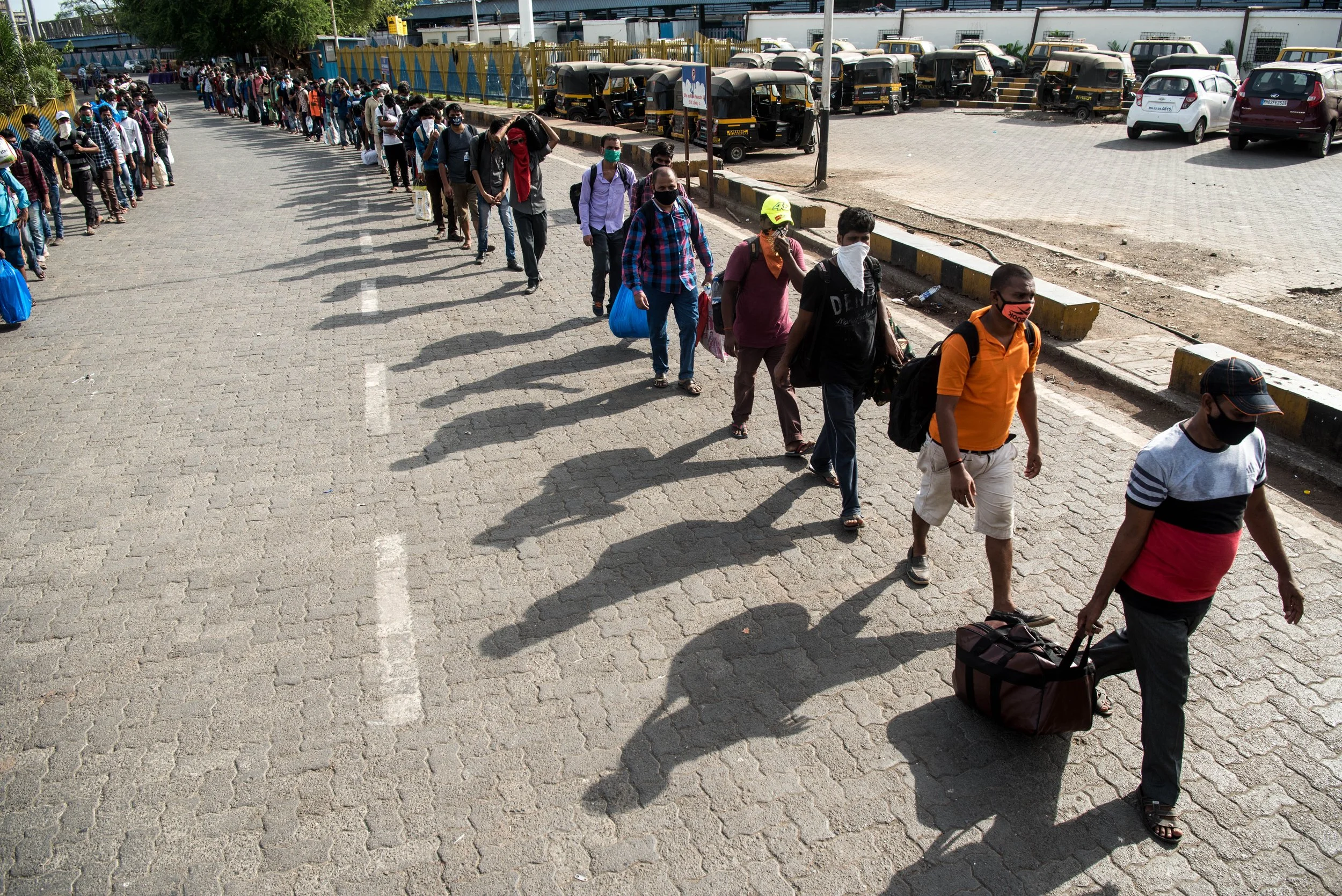
Wage theft is business as usual in many industries that are reliant on migrant workers. Employers know that most unpaid migrant workers will never recover their wages through government and court processes. With the pandemic leaving even more migrant workers unpaid, the need for effective justice mechanisms has never been more urgent.
Migrant Workers’ Access to Justice for Wage Theft, a new report from Migrant Justice Institute Co-Executive Directors Bassina Farbenblum and Laurie Berg, charts a path forward. Pointing to promising examples from around the world, the report illuminates how the barriers that impede migrant workers’ access to justice can be overcome. These innovations shift risks and burdens of wage recovery away from workers and onto government and business, and disrupt employer expectations of impunity.
The report draws on a year of global consultations and analysis across all regions, in partnership with The Solidarity Center and the ILAW Network. It proposes specific, practical reform targets that can underpin global, national and local wage theft campaigns, and support greater coordination among a community of practice working to achieve effective change.

Webinar 7 Dec: Migrant Workers’ Access to Justice for Wage Theft: What Works?
Join the Migrant Justice Institute for this important conversation with global experts. Which features of government wage remediation systems are working for migrant workers, and why? Which reform targets will have the greatest impact to strengthen migrant workers’ access to justice?
Join the Migrant Justice Institute for this important conversation with global experts. Which features of government wage remediation systems are working for migrant workers, and why? Which reform targets will have the greatest impact to strengthen migrant workers’ access to justice?
December 7 2021 - 8:00-9.30am GMT
A new global study from Migrant Justice Institute Co-Executive Directors Bassina Farbenblum and Laurie Berg identifies promising initiatives from around the world that disrupt employer impunity and enable migrant workers to recover the wages they are owed. The report authors and other global experts will discuss the most promising national innovations to improve wage recovery in every region of the world.
Speakers
Elizabeth Frantz, Open Society Foundations | Moderator
Associate Profs Bassina Farbenblum and Laurie Berg, Migrant Justice Institute | The study’s key findings and most impactful reforms
Shawna Bader-Blau, The Solidarity Center | The global campaign for migrant worker justice for wage theft: where to from here?
Terri Gerstein, Harvard University and Economic Policy Institute (former NY Dept of Labor) | State and local enforcement innovations in the US
Jill Wells, Engineers Against Poverty | Holding business to account: supply chain liability for remedying wage theft in the construction industry
Douglas MacLean, Justice Without Borders | Pursuing wage claims across borders: innovations and lessons from Southeast Asia
Apolinar Tolentino, BWI | Building collective worker power to recover wages across borders
Ben Harkins, International Labour Organisation | Opportunities for international organisations to improve wage recovery processes: lessons from Migrant Resource Centres in South East Asia

Launching the Migrant Justice Institute in 2022
After five years of building the Migrant Worker Justice Initiative, we are delighted to share that we are expanding this collaborative project into a new non-profit organisation, the Migrant Justice Institute.
After five years of building the Migrant Worker Justice Initiative, we are delighted to share that we are expanding this collaborative project into a new non-profit organisation, the Migrant Justice Institute.
The Migrant Justice Institute will undertake strategic research and legal action to achieve fair treatment, enforcement of rights and access to justice for migrant workers in Australia and globally. We will continue to work with migrant communities, governments, business, civil society, trade unions, international organisations, and donors to chart pragmatic new pathways for decent work and responsible recruitment for migrant workers.
Australian Senate Report Adopts our Recommendations to Address Migrant Worker Exploitation
In 2020, the Australian Senate undertook a major inquiry into temporary migration. Its Final Report, issued today, incorporated 10 of our recommendations for national law and policy reforms to address exploitation of migrant workers.
In 2020, the Australian Senate undertook a major inquiry into temporary migration. Its Final Report, issued today, incorporated 10 of our recommendations for national law and policy reforms to address exploitation of migrant workers. Along with a number of further recommendations, these represent an important step towards increased worker protections. With over 20 references to our submission, the Committee relied heavily on the evidence established by our research in recommending a number of unprecedented reforms.
Our key recommendations adopted by the Committee include the following:
Reduce barriers to make a wage theft claim: The Committee recommended establishing a firewall between the federal labour enforcement agency (Fair Work Ombudsman (FWO)) and immigration department. It also recommended that the Government monitor and review the 40 hour work limit for international students (Condition 8105) (which we recommend should be abolished because noncompliance places many students into irregular status with increased vulnerability to exploitation);
Improve dispute resolution mechanisms: The Committee recommended a new, accessible and effective small claims tribunal (for workers to resolve wage theft claims);
Immigration relief to pursue labour claims: The Committee recommended permitting temporary visa holders to stay in Australia until their claims are finalised;
Enhance enforcement: The Committee recommended increasing resources and migrant worker access to community legal services and the FWO, along with increasing union right-of-entry powers;
Prevent the exploitation of migrant workers: The Committee recommended the introduction of a federal labour hire scheme;
Create pathways to permanency: The Committee recommended that temporary and permanent migration programs be aligned to provide pathways to permanency.
Importantly, the Report recommends that reforms be informed by further research and enhanced data collection. The Migrant Justice Institute looks forward to supporting the development and implementation of the proposed reforms through robust research and analysis.

New report reveals temporary migrants' anguish of exclusion and racism in Australia during COVID-19
In early April, Prime Minister Scott Morrison sent a clear message to temporary visa holders that if they were no longer financially solvent to ride out the pandemic, they were not welcome in Australia.
As much as it’s lovely to have visitors to Australia in good times, at times like this, if you are a visitor in this country, it is time […] to make your way home.
As our new research published today shows, this statement fuelled feelings of abandonment and worthlessness among temporary visa holders who have been left out of the government’s economic support schemes during the COVID-19 crisis.
In our survey of more than 6,100 temporary visa holders (including international students, backpackers and holiday workers), many used stark, dehumanising language to describe how they’ve felt since the pandemic began in Australia six months ago.
Read more in The Conversation.

Early survey data confirms temporary migrants' suffering worsening during COVID-19
Early data from the Temporary Migrant COVID Impact Survey, released today, shows that the financial hardship of temporary migrants is likely to worsen in the coming months. Preliminary analysis from our online survey of over 6,000 temporary migrants in July indicates that over half of the participants (57%) anticipated their financial situation would be somewhat or much worse within six months.
The government’s treatment of temporary visa holders during the crisis also soured many on their experience here. According to our survey, 59% of international students and backpackers were now somewhat or far less likely to recommend Australia as a place for study or a working holiday.
Read our article in The Conversation.

International Students and Wage Theft in Australia
Based on a survey of over 5,000 international students in 2019, the International Students and Wage Theft in Australia report reveals that, despite commitments to improve conditions, the overwhelming majority of international students are still subject to wage theft and poor employment conditions.

Key findings include:
● 77% were paid below the minimum casual hourly wage.
● 32% of Bachelor’s degree students earned just half the minimum casual hourly wage or less ($12/hr or less).
● 26% of all international students earned half the minimum casual hourly wage or less — a figure unchanged since the 2016 National Temporary Migrant Work Survey.
● The overwhelming majority of students who were underpaid knew the minimum wage (86%), but 62% believed they were at fault for the underpayment and had broken the law by accepting below minimum wages.
The report recommends improved labour enforcement and visa protections for international students, as well as improved service provision to address exploitation. Funded by StudyNSW, the Information for Impact Survey was conducted in April and May 2019, and yielded 5,064 valid responses.
New Temporary Migrant COVID Impact Survey
MWJI is now conducting a survey about the wellbeing of temporary migrants in Australia during COVID, to document challenges temporary visa-holders have faced in relation to work, housing, health and safety and discrimination.
Please share the survey widely among international students, backpackers, refugees and others on temporary visas to ensure we capture as many voices as possible in this landmark study. Survey closes on 20 July 2020.
Photo by Madalyn Cox on Unsplash
Article: Addressing Exploitation in Supply Chains: Is technology a game changer for worker voice?

A new article published by Laurie Berg, Bassina Farbenblum, and Angela Kintominas in the Anti-Trafficking Review’s Special Issue – Technology, Anti-Trafficking, and Speculative Futures examines the emergence of digital worker reporting tools within the broader political economy of supply chain governance. As multinational businesses face mounting pressure to identify and address risks of exploitation, trafficking and modern slavery in their supply chains, the article presents three sets of concerns that must be addressed by businesses, investors, donors and governments that develop or utilise these worker reporting tools. First, the quality of data gathered may be inadequate to reliably inform decision-making. Second, global brands may gather large quantities of worker data to identify legal, reputational and financial risks without addressing structural causes of exploitation or delivering outcomes for workers. Third, large scale collection of data from workers creates new risks for workers’ wellbeing and safety.

Living Precariously: Understanding International Students' Housing Experiences in Australia
The Living Precariously report reveals that international students are encountering a minefield of deceptive and exploitative conduct by landlords in Australian housing markets, especially in unregulated share houses where most live.
Key findings include:
Share houses were by far the most common first accommodation for international students (36%).
More than half of international students reported deceptive or illegal conduct by landlords or poor living conditions in their first share house.
Most international students found their share house through unregulated online platforms including Gumtree and Flatmates.com.au (51%). These students reported the highest rates of deception, overcharging, excessive demands for money upfront and poor living conditions.
Poor conditions and exploitative and deceptive conduct were not limited to a certain subset of international students: they were similarly reported by students at universities, vocational colleges and English-language colleges, as well as by men and women of various nationalities.
The report recommends government and universities provide improved housing services to empower international students, and that government strengthen regulation, investigation and enforcement to hold landlords to account and break cycles of impunity.

The Living Precariously report is the most comprehensive study of housing and working conditions among international students in New South Wales, and across Australia. It was conducted in April and May 2019, and yielded 5,064 valid responses.
Photo by Madalyn Cox on Unsplash

National Report on Au Pairing in Australia
Cultural Exchange or Cheap Housekeeper? Findings of a National Survey of Au Pairs in Australia
On 28 November 2018, Laurie Berg and Gabrielle Meagher released the report Cultural Exchange or Cheap Housekeeper? Findings of a National Survey of Au Pairs in Australia. This report reveals that the majority of au pairs in Australia are paid as babysitters but work like housekeepers. This report draw on responses from 1,479 participants who had au paired in households in every Australian state and territory.
Key findings include:
Most participants came to Australia looking for a traditional ‘cultural exchange’, but almost 60 percent found themselves working for around 36 hours a week, doing not only childcare but daily cooking, cleaning and other household tasks.
Average working hours were 34 hours per week; nearly a third (30%) worked 40 hours per week or more.
Taking into account a generous value of room and board, a majority of participants (58%) were paid less than the national minimum wage.
A third of participants worked in families who lived in the most advantaged 10% of suburbs in Australia.
Cultural agencies promote au pairing as a cultural experience. However, participants who used an agency to arrange their placement fared no better than others in relation to working hours, rates of pay or inclusion in family activities.
Most participants did not understand how Australian visa rules relate to au pairing and the consequences of breaching visa conditions.
The report recommends that government provide clear, detailed guidance to au pairs and host families on the employment and other rights of the thousands of foreign au pairs in Australian homes each year, as well as a funded service for assistance and advice.
Transformative technology for migrant workers
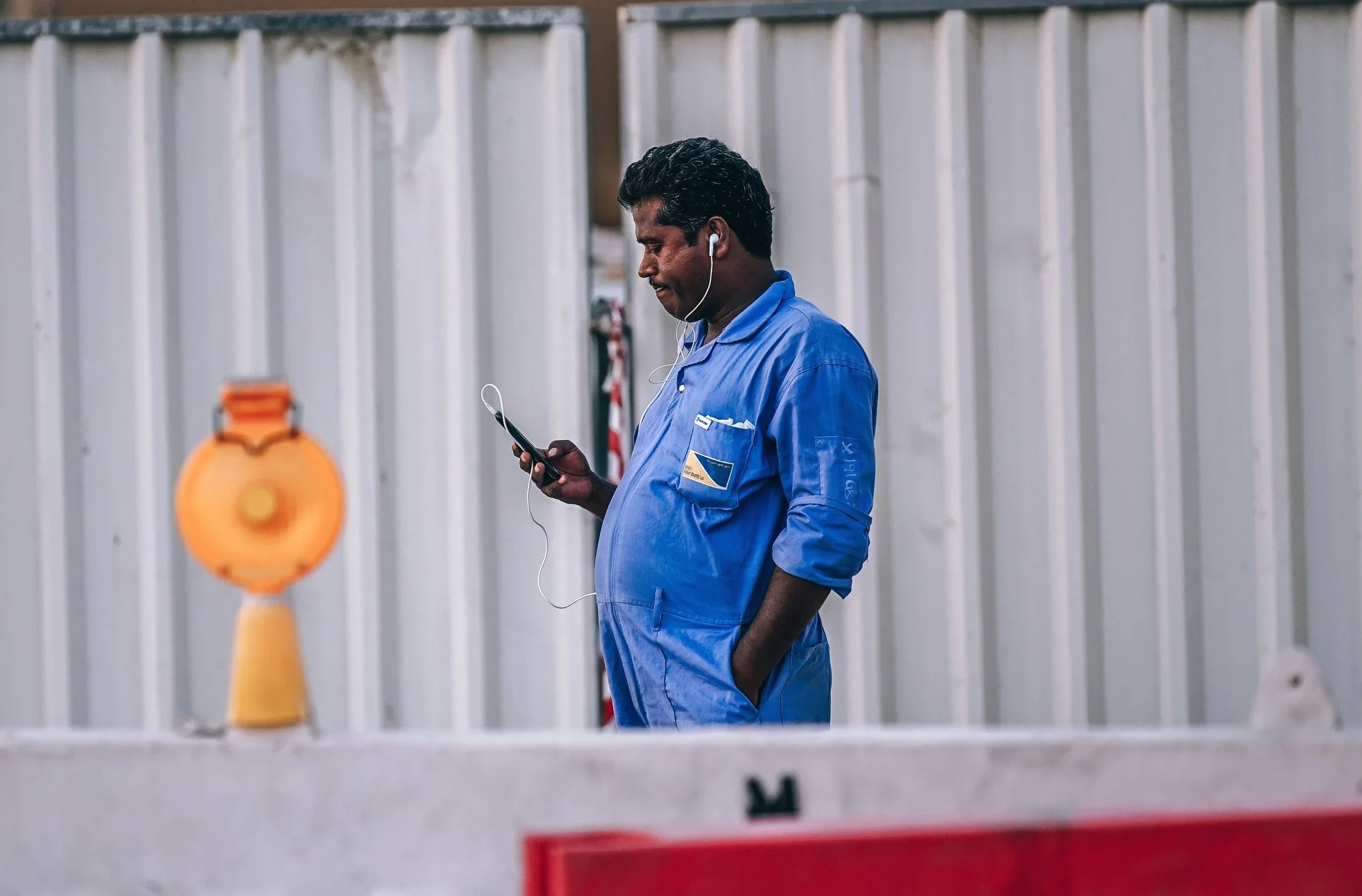
Digital technology offers the promise to transform the labour migration landscape and to empower workers in new and previously uncontemplated ways. However it also gives rise to a host of practical, ethical and legal challenges. Transformative Technology for Migrant Workers, released today, takes stock of the rapidly evolving landscape of digital tools that businesses, worker advocates and governments have developed to address exploitative recruitment and labour conditions. It considers the factors that contribute to (or undermine) the effectiveness of these tools, and the risks they create for workers and host organisations. The report concludes that technology’s transformative potential will only be realized through responsible and well-considered approaches to the funding, development, and implementation of platforms that respond to migrant workers’ vulnerabilities and the structural drivers of exploitation.

The report focuses in particular on the unprecedented and amplified opportunities digital technology presents for migrant worker engagement, empowerment, and justice. For instance, businesses have mobilized technology to enable them to obtain information from large numbers of workers in their supply chains about their recruitment and working conditions and identify poor practices among suppliers. Digital platforms have been built by worker organisations to connect and organize workers and enable them to share their experiences and strategies, and to take collective action for better working conditions. Worker advocates have also developed digital platforms to transform the power and information asymmetries that underpin exploitation, by enabling migrant workers to access information they need to make choices and assert their rights. Governments and civil society organizations have sought technological solutions to overcome the barriers facing migrant workers who wish to register complaints and pursue redress. In addition to examining transferrable lessons that can be learned from initiatives in each of these spaces, the report considers the ways in which the digital tools create privacy and security risks to workers and legal and other risks to platform hosts. It considers resourcing and other challenges to sustainability and scalability of digital tools, and approaches to design and implementation that ensure the tools are taken up by vulnerable workers and deliver meaningful outcomes to them.

Wage Theft in Silence: Why Migrant Workers Do Not Recover Their Unpaid Wages In Australia
On 29 October 2018, Bassina Farbenblum and Laurie Berg released the report Wage Theft in Silence: Why Migrant Workers Do Not Recover Their Unpaid Wages in Australia. This report reveals that the majority of migrant workers are paid well below minimum wage but very few ever take action to get the wages they are owed. This report, and the 2017 report Wage Theft in Australia, draw on responses to the National Temporary Migrant Work Survey from 4,322 participants across 107 nationalities of every region in the world, working in a range of jobs in all Australian states and territories.
Key findings include:
Among international students and backpackers who acknowledged they had been underpaid in Australia, the overwhelming majority suffered wage theft in silence. Fewer than one in ten took action to recover wages they were owed.
Of the small number who tried to recover wages, two in three recovered nothing. Fewer than one in six received the full amount they were owed.
Only 3% of underpaid participants contacted the Fair Work Ombudsman and well over half of them recovered none of their unpaid wages.
Though it is often assumed that most underpaid migrant workers are not interested or willing to take action to get the wages they are owed, in fact well over half of survey participants indicated that they were open to trying to recover their wages. This suggests that if resources are devoted to interventions that better enable migrant workers to report and address underpayment, many more would do so.
It is commonly assumed that migrant workers won’t report underpayment because they are unfamiliar with the different legal culture in Australia. In fact, Asian participants were the most open to trying to recover their wages.
Participants selected a range of rational reasons why they had not sought to address their underpayment: a quarter indicated fear of possible immigration consequences, close to a half reported that they did not know what to do, and many believed they would not be successful.
Many of these barriers can be practically addressed. There is an urgent need for a new or better process for wage recovery, better resourced support services, and a guarantee that migrants’ visas will not be jeopardised if they report wage theft.

New study goes deeper into international student exploitation
A UNSW Sydney and UTS project will lead the international education sector to respond to exploitation of international students in accommodation and at work.
The NSW Government through Study NSW has announced $78,670 in funding for a study to be led by UNSW Law Senior Lecturer Bassina Farbenblum and UTS Law’s Dr Laurie Berg.
It follows a 2017 report by Berg and Farbenblum, Wage Theft in Australia, that found a quarter of international students surveyed were earning $12/hr or less and 43% of students earned $15/hr or less – well below minimum wage.
“This study will give the international education sector a deeper understanding about the problem of student exploitation, finding out what information international students need to avoid exploitation at work and in their accommodation, and to address it when it happens,” Ms Farbenblum said.
See further at: http://humanrights.unsw.edu.au/news/new-study-goes-deeper-international-student-exploitation
Article: Lessons from the 7-Eleven Wage Repayment Program for remedying migrant worker exploitation in Australia

Temporary migrants comprise approximately 11% of the Australian workforce and are systemically underpaid across a range of industries. The most vulnerable of these workers (including international students and backpackers) rarely successfully recover unpaid wages and entitlements. In 2015, media revealed systematic exploitation of 7-Eleven’s international student workforce, reflecting practices that have since been identified in other major Australian franchises. In an unprecedented response, 7-Eleven head office established a wage repayment program, which operated until February 2017. As of mid-2017, the program had determined claims worth over $150 million — by far the highest rectification of unpaid wages in Australian history.
Drawing on interviews with international students and a range of stakeholders across Australia, this article uses 7-Eleven as a case study to illuminate systemic barriers that prevent temporary migrants from accessing remedies for unpaid entitlements within existing legal and institutional frameworks. We identify the unique attributes of the 7-Eleven wage repayment program that have contributed to its unusual accessibility and efficacy, and which may point to conditions needed to improve temporary migrants’ access to justice through state-based institutions and business-led redress processes.